

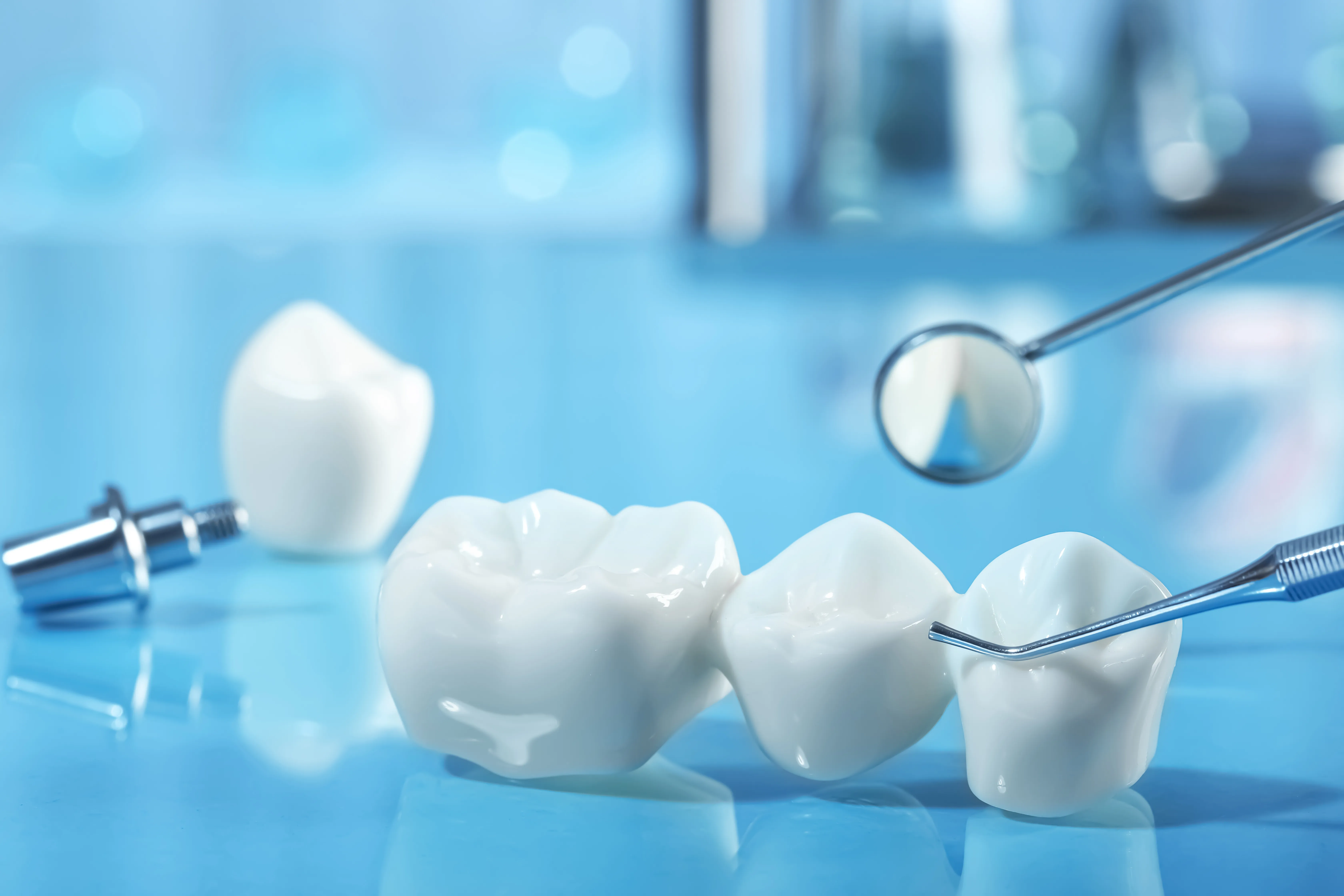
Dental Bridges Chicago, IL
Dental bridges in Chicago, IL, restore spaces left by missing teeth so you can chew, speak, and smile with confidence. At Juniper Dentistry, bridges are custom made to match your natural teeth in color and shape.
Understanding Dental Bridges
A dental bridge is a fixed restoration that replaces one or more missing teeth by anchoring an artificial tooth (pontic) to the teeth or implants on either side of the gap. The anchors provide support, and the pontic "bridges" the space so your bite functions more like it did before tooth loss.
Types of Dental Bridges
- Traditional bridge: Uses crowns on two neighboring teeth to support one or more pontics.
- Implant-supported bridge: Connects to dental implants instead of natural teeth for added stability.
Benefits of Dental Bridges
- Restores chewing efficiency for a more balanced diet.
- Prevents neighboring teeth from drifting into the space.
- Improves speech clarity when front teeth are missing.
- Protects bite balance and reduces stress on remaining teeth.
- Offers a fixed, non-removable alternative to a partial denture.
The Dental Bridge Process
The path to a new bridge follows several precise steps designed for comfort and accuracy. Here is a step-by-step dental bridge guide:
- Evaluation and planning: Your dentist reviews your goals, examines the area, and may take X-rays or a 3D scan.
- Tooth preparation: For traditional bridges, supporting teeth are shaped to make room for crowns.
- Impressions and shade: Digital or physical molds and a color match help the lab create a natural look.
- Temporary bridge: A provisional bridge protects the prepared teeth while the final is crafted.
- Fitting and placement: The final bridge is tried in, adjusted for bite, and cemented securely.
- Follow-up: A brief check confirms comfort and proper function once you have worn the bridge.
What to Expect
Local anesthesia is used during preparation, so you should feel pressure but not pain. Mild soreness or temperature sensitivity can occur for a few days and usually improves with over-the-counter relief. Eat soft foods while wearing a temporary bridge and avoid sticky items that could dislodge it.
A well-made bridge can last 10–15 years or longer with consistent care. Daily flossing under the pontic with a threader or water flosser, twice-daily brushing, and regular professional cleanings are essential. If you grind your teeth, a nightguard can help protect the restoration.
Good candidates have healthy gums, stable neighboring teeth or implants, and a bite that supports the planned design. If support teeth are compromised, an implant-supported solution may be discussed.
For questions about dental bridges in Chicago, Illinois, contact Juniper Dentistry at 312-766-9395 to schedule a visit.
Frequently Asked Questions About Dental Bridges
- A bridge spans a gap left by missing teeth. Crowns or implants on the sides act as anchors, and the pontic fills the space.
- With good oral hygiene and routine checkups, many bridges last 10–15 years or more.
- Each option has advantages. A bridge can replace a tooth without surgery and offers quicker treatment, while an implant replaces the tooth root and preserves bone.
- Yes. Shade matching, custom contours, and modern ceramics allow bridges to blend with nearby teeth.
- Brush twice daily, then clean under the pontic with a floss threader or water flosser. Add fluoride toothpaste and regular professional cleanings.