

Night Guards in Chicago, IL: Protect Your Smile While You Sleep
Juniper Dentistry provides customized night guards in Chicago, IL to help protect teeth from clenching and grinding during sleep. A night guard is a simple, comfortable way to reduce enamel wear, jaw soreness, and morning headaches linked to bruxism.
Night Guards Explained
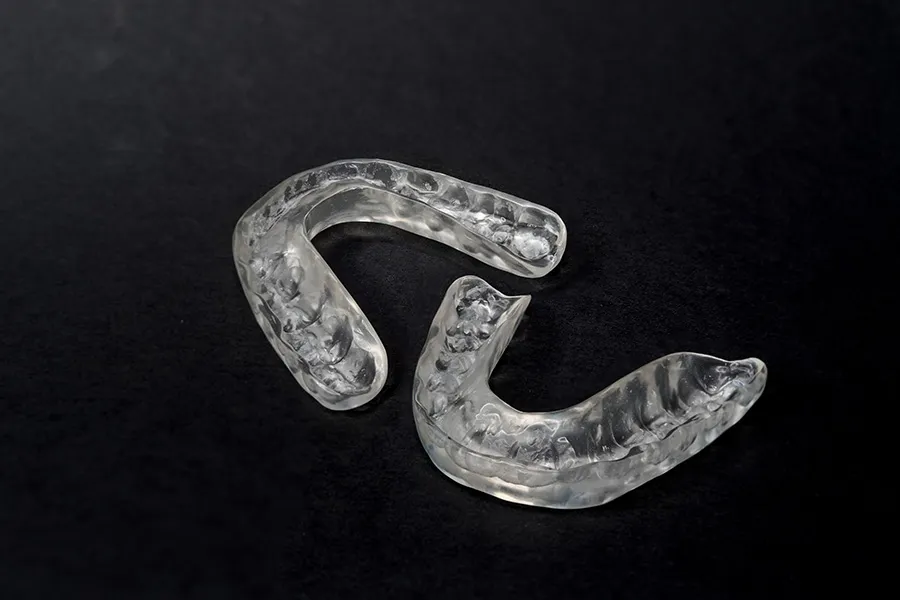
A night guard is a slim, durable appliance worn over the upper or lower teeth while you sleep. It creates a smooth, protective barrier so teeth slide instead of grind, and it distributes bite forces more evenly to reduce stress on the jaw joints.
There are two main categories of night guards: custom-made guards from a dental office and store-bought options. Custom dental night guards are fabricated from precise models of your teeth. They fit closely, stay in place, and are designed to match your bite.
Materials vary based on your needs. Soft guards can cushion mild clenching. Hard acrylic guards are more durable for heavy grinding. Hybrid designs combine comfort with strength.
Benefits of Night Guards
- Protects enamel from fractures, chipping, and wear caused by grinding.
- Reduces jaw muscle tension and may ease TMJ pain and morning headaches.
- Helps stabilize the bite by spreading forces more evenly across teeth.
- Supports dental work by shielding crowns, veneers, and fillings from stress.
- Improves sleep comfort for many patients with clenching or bruxism.
- Offers a non-invasive option before considering other therapies.
How Night Guards Work
Night guards do not stop grinding at the source; instead, they act as a buffer and re-direct forces. By placing a smooth layer between the arches, the guard prevents tooth-on-tooth contact and reduces microtrauma to enamel and dental work. The design can also position the jaw in a more relaxed posture, which may alleviate strain on the temporomandibular joints.
Your Night Guard Visit
The process is straightforward:
- Evaluation: Your dentist reviews symptoms, checks for wear, and assesses TMJ tenderness.
- Impressions or scan: Digital scans or impressions capture a precise model of your teeth.
- Fabrication: A dental lab creates your custom guard from durable materials.
- Fitting: The appliance is adjusted to your bite for comfort and stability.
- Instructions: You receive guidance on wear time, cleaning, and storage.
What to Expect
Most people adapt to a night guard within one to two weeks. It should feel snug but not painful. Mild pressure on the first few nights is common and often improves after minor adjustments. Clean the guard daily with a soft toothbrush and non-abrasive cleanser, and store it dry in a ventilated case.
With good care, many hard or hybrid guards last two to five years. Replacement timing depends on grinding intensity, material, and any changes in your bite.
Common signs you may need a night guard include tooth sensitivity, edge wear, cracked restorations, jaw tightness, and partners noticing grinding sounds. If these symptoms sound familiar, a custom night guard may help protect your teeth while you address contributing factors such as stress or misalignment.
Frequently Asked Questions About Night Guards
- Custom guards are made from your dental models for a precise fit, better comfort, and durability. Store-bought guards are bulkier and wear out faster.
- By reducing clenching forces and preventing tooth-on-tooth contact, a guard can lessen muscle fatigue and joint strain.
- Hard or hybrid guards often last two to five years, depending on grinding intensity and care. Heavy grinders may need more frequent replacements.
- Rinse after each use, brush gently with a soft toothbrush, and avoid abrasive toothpaste. Let it dry fully and store it in a ventilated case.
- Either can work. The choice depends on your bite, dental work, and comfort. Your dentist will recommend the option that best protects your teeth and joints.